ADHD Voices: CG

Photo courtesy of CG

I grew up in a suburban town in the 80s and 90s, when ADD and Ritalin were only for rambunctious boys who couldn’t sit still. Not for smart, talented girls with quickfire brains who were destined to go places, who were lost in thought all the time and who couldn’t seem to not make silly mistakes on tests or ever clean their rooms or make any real friends, but that’s not a problem, right? If she’d just try harder it’d all be fine, right?

My undiagnosed ADHD was a problem all along, even if the adults in my life either didn’t see it or were in denial that it was anything other than my own poor self-discipline. It became a major problem when I went off to college and found things like going to class and starting homework to be absurdly difficult. I could barely manage Cs in most of my classes.

Mounting problems

I’d always had problems with this sort of thing, but nobody else I knew seemed to have these difficulties, and I didn’t understand why. But I hadn’t felt particularly attached to my major, so I transferred to another school closer to home and tried computer science. I had the same issues there, so I moved 500 miles away to be with my internet boyfriend and got a job. As it turned out I wasn’t any better at making myself go to work, pay bills, or even maintain basic self-hygiene. Plus the boyfriend was awful. 

After I had a nervous breakdown, my dad told me that if I moved back home and tried college again, he’d pay for an apartment for me, so I did. I went to class for maybe a week before I fell into a deep months-long depression that scared my dad so much that he forced me to go to therapy and get on antidepressants.

This was around the time when all the kids I went to high school with were in their senior year of college and preparing to graduate. But I felt like I had missed some sort of “how to be an adult” class somewhere along the way. What I couldn’t understand was that if I was so smart and talented like everyone had always said, how was it that I was the one who floundered around, getting nasty voicemails from temp agencies I’d ghosted and avoiding opening the yellow bills I received in the mail? It must’ve just been that I was a lazy failure, right?

The antidepressants lifted my mood, and pretty soon I met my future wife (though at the time I thought she was my husband). We had a whirlwind romance and were married within 18 months. She and I were the best of friends but she was (understandably) very frustrated about being married to someone who couldn’t remember to do chores or pay bills. She didn’t understand why I couldn’t just do things, and I continued to hate myself because I didn’t understand why either. 

The argument that changed everything

We eventually bought a house and later had a son who is fantastic. A few years into that part of life, my wife and I were arguing about how she’d never heard of anyone other than me who didn’t want to go on walks because they were boring.

In frustration I Googled, trying to find a defense, and found a forum where someone asked about this exact issue and a commenter responded, “Have you looked into ADHD?” I scoffed, but looked up the symptoms for ADHD, fully expecting to immediately rule them out. To my shock, I realized I matched nearly all the symptoms for ADHD-Primarily Inattentive. The next week, I told my therapist, “I think I might have ADHD!” and she responded, “I was starting to think that too.”

I went to my doctor, who after some discussion prescribed me a small dose of plain old Adderall, and I was astounded at the difference it made. Doing boring stuff wasn’t easy per se, but it was much easier for me to at least get started. I was much more mentally present at work and in conversations, and my wife said for the first time she could actually talk to me and feel like I was truly listening. And the weight of “lazy failure” finally started to lift, because I no longer had to view these things as a personality defect or a moral failing; it was a treatable mental health condition.

It has not all been smooth sailing since then. We got laid off from our jobs at almost the same time. Our house got foreclosed on because I forgot to pay the bill, a lot. I estranged myself from my entire biological family over a period of ten years, for reasons that could get an entire blog of their own. We moved to a new city in a new state. The first doctor I found shooed me away as a drug-seeker and it took me 3 years to remember to find a new one, which coincided with (for non-ADHD reasons) an extremely rough patch in my marriage. Eventually my wife came out as a woman, which prompted a lot of thinking on my part, and as it turned out I was nonbinary.

And I think I’m actually ADHD-Combined Type—I just at some point smushed all the hyperactive parts deep into my brain, or into small subtle body movements, so that they wouldn’t pop out and annoy everyone. But knowing I have ADHD has given me explanations for so much of my history, and I’d encourage anyone reading this who feels the way I felt to give the symptom list a glance. It might change your life. 

~~~

CG can be found as @boundariesmfer on Twitter

~~~

ADHD Voices is a series dedicated to sharing the stories of folks like you and me who have ADHD. Posts in the series are written by guest authors, sharing windows into their lives and struggles, written by them, for you and me. If you’d like to share your story, please contact me on social media or through my email, ADHDsurprise @ gmail.com

~~~

Looking for more great ADHD content?
Check out all of Jamie’s platforms:

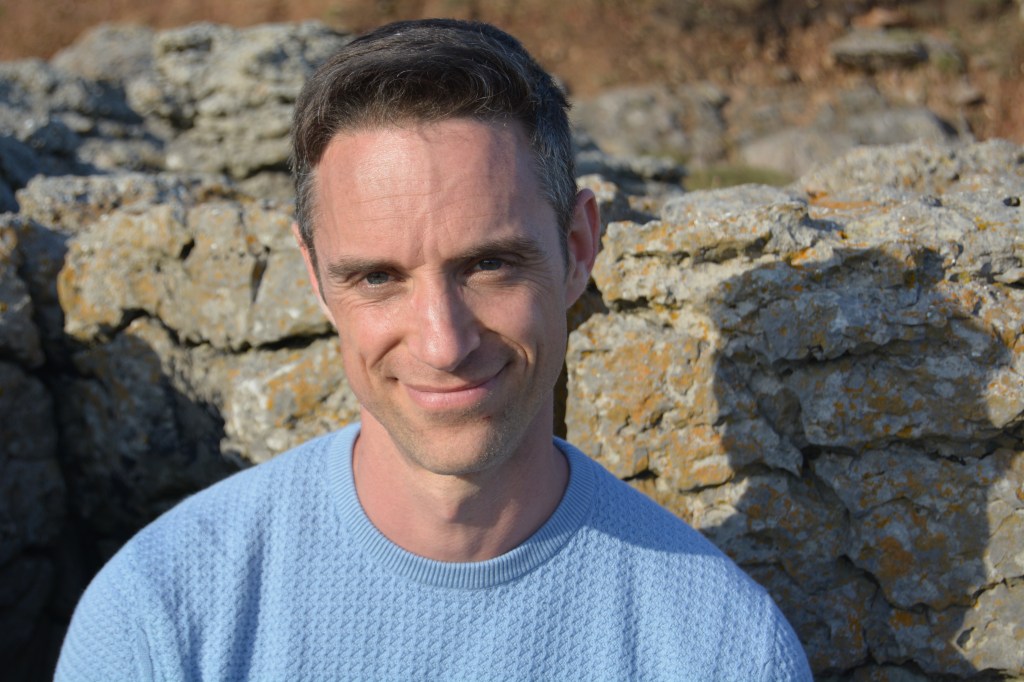
ADHD Voices: Jamie V.

Photo courtesy of Jamie Vasilyan

TW: Self harm, suicide attempts, drug use

Today I live an interesting and wholesome life. I’m probably not as “far along the path” as I should be, due to the “fall out” from a life of ADHD. But my mood is generally good, I can focus for long periods of time, and I have found ways to persist with the “boring stuff.” Part of my recovery was in finding a career path that I am passionate about and which brings me a deep sense of purpose.

I work today as what I call “The Hypnosis for ADHD Specialist,” helping other people recover and even master their ADHD. But it wasn’t always that way. Permit me to take you on a tour to the hellish underworld of my own Dante’s inferno.

“First, before I tell of the good,
I must tell of the other things I saw.”
~Dante’s Inferno 

ADHD Hell 

I was always an “oddball” growing up. I didn’t seem to fit in with the other kids. On the playground I would prefer my own company, or the company of adults to fellow children.  And from the age of 7, it was clear that something was wrong. I would only do one thing at school: draw killer whales on the blackboard. If I was asked to do anything else, I would throw a tantrum and destroy the classroom but forget what happened. 

It was only in later years that I came to understand that when you go into a blind rage, your “fight or flight” (reptilian) brain takes over, and your memory for details becomes a bit foggy! On the other hand, I was very bright, but school reports typically said, “Jamie has a lot of potential, but is distracting and distractible.” 

I also struggled throughout my school career with bullying, and was moved schools. But as they say “better the devil you know than the one you don’t.” Because the bullying at the new school was worse. 

I had a psychological assessment at 12, which reported that I appeared depressed, and that I needed to be moved into higher classes due to good intelligence and a need for more mental stimulation. There were some positive outcomes to this, e.g. I had worked hard to get out from the bottom maths class and they moved me up, and for the first time I was in a quiet classroom where I could focus easily. 

But that didn’t last long. I was moved schools due to the bullying, not just by older students but also teachers, including the one who I confided in who told me “Bullying doesn’t happen in this school.” When I moved schools again, for some reason they put me back in a low class and I gave up all hope. Maths became my worst nightmare. 

It wasn’t long after, suffering from childhood depression and undiagnosed ADHD, that I attempted to take my own life, by hanging myself. Not once, but twice. The first time I did it as a “cry for help” in front of a friend who got me down; the other time on my own, and miraculously I was able to swing my legs back and grab hold of the trunk behind me to hold on to and then release the rope. Children with ADHD are much more likely to attempt suicide, and males are much more likely to physically act on it. Luckily, I survived.

ADHD In-Between (Purgatory) 

In 2004, at the age of 24, I realised that my life was falling apart. I wasn’t able to hold down a job and be on time. After coming across the book, “Driven to Distraction,” my life changed forever as I sought a diagnosis. 

The psychiatrist diagnosed me with ADHD, and despite not wanting to take medication, that was all that appeared available for treatment options. So I took the 5mg of Ritalin in the morning, thinking to myself, “beggars can’t be choosers.” Despite such a small dose, I had a lot of side effects, including dehydration, dark eyes, Tourette’s syndrome, and I also fainted at one point. 

My psychiatrist recommended a second daily dose to counter the “rebound effect” (which is the negative state of mind that ensues after the medication wears off) but I decided enough was enough and stopped my medication.

During this time I had also become homeless and was incredibly depressed again, making yet another suicide attempt at the Salvation Army where I was staying. This time I threw myself at a fourth story window, but luckily the staff had broken in to my room fast enough to stop me falling through. I got away with just cuts and bruises. They say it’s better to know you have ADHD than not know. I’d agree. But it was still painful. 

ADHD Heaven – Well, almost! 

So I had stopped my medication but in all honesty didn’t have a better plan. As luck would have it, my diagnosis of ADHD and depression meant that I was offered a flat by the council shortly after that last incident. I lived alone for a few years, out of work, on disability benefits. I became addicted to socialising with the wrong people, and addicted to drugs which seemed to numb the pain of an “overactive” mind. 

But then, in 2006, I went to a Mind, Body, Spirit event and met someone very special, Sara Bailey. She was one of those people that you feel instantly at ease with, like you’d known them forever. She became my best friend, and to be honest I’d never had one of those before. She was also a trained Master of Hypnotherapy and NLP. Due to my own interest in this area, I asked to learn. She taught me how to hypnotise and coached me to become more positive. 

By 2008 I decided to volunteer with autistic/ADHD children, with the view to start a new career, moving from my old work in sales to care work. I volunteered for two years, and then went back to work. All this was possible with Sara’s help. When the going got tough, I’d remember the words she quoted from Tony Robbins: “Change happens when the fear of staying the same outweighs the fear of change.” 

Despite my fears of changing, the fear of being stuck where I was eventually became unbearable. Sara got me to focus on what I wanted and what truly switched me on. What gave me purpose and passion? It started with helping those autistic and ADHD kiddos. Then in 2011, I had my big breakthrough. After two and a half months of daily meditation and taking up weight training for the first time in my life, I overcame my depression and my ADHD symptoms began to improve. 

Not only did I go back to work, but I was also taken off disability benefits and was considered in remission and fit for work. I retrained in the same year as a Solution Focused Clinical Hypnotherapist, and began to help other people. I began to live the dream that Sara had re-awoken in me that I had given up on: to help other people find their purpose and passion in life. 

It still isn’t easy, but I have progressed from then to work for a decade as a support worker for children with learning disabilities, and also specialise as an ADHD hypnotherapist and coach. Whilst the lifestyle changes like diet, exercise, meditation, as well as learning about my uniquely wired brain and how it works, made a big difference, it was finding my niche as a specialist in ADHD Hypnotherapy that became my “ADHD dynamite.” 

Today, I still have ADHD, but I don’t let it hold me back anymore. I’ve found my dynamite, and I’m capitalising on it. I hope you, too, with the right support and information, will find your way through the jungle of ADHD.  

~~~

Jamie Vasilyan, also known as The Hypnosis for ADHD Specialist, can be found as @AddvantageH on Twitter and you can check out his website as well.

~~~

ADHD Voices is a series dedicated to sharing the stories of folks like you and me who have ADHD. Posts in the series are written by guest authors, sharing windows into their lives and struggles, written by them, for you and me. If you’d like to share your story, please contact me on social media or through my email, ADHDsurprise @ gmail.com

~~~

Looking for more great ADHD content?
Check out all of Jamie’s platforms:
ADHD Voices: Tanya

Photo courtesy of Tanya Polly

I’d always known I was different. Not in a Peter Parker spidey-senses-tingling kind of way. More like that feeling when you have a cold, your senses are dulled, and you know that you’re not quite hearing everything at full volume. But you’re very aware that everyone else is operating on Dolby Digital surround sound. 

There was the time I told a friend’s mum that I wore tights in summer because they “filtered the warm air” so it was cooler by the time it got to my legs. Or when we had to write about one of Leonardo da Vinci’s inventions in a history class and I spent an hour praising how ingenious it was that he had created the world’s first trampoline. He hadn’t. It was a parachute. But my head had seen “cloth stretched apart by wooden poles” and it meant someone could fall from a height “without injury.” Interpreting things slightly oddly has always been my forte. 

Struggling with school

Then there was hitting age 15 and being surrounded by all my classmates studying for mock exams; I just didn’t understand. I knew what I’d been taught, and I wasn’t going to waste hours re-writing all of my schoolwork in the vague hope that I’d remember it all a bit better. 

I’d been a model student until then: I was a real-life Hermione (right down to the precocious corrections of everyone’s grammar) and loved to learn. I devoured books. I was always reading, writing, drawing, crafting. Anything to keep my hands and my mind busy. I just wanted to know everything. I would obsess for weeks or months on a topic. Pirates. Rainforests. Tornadoes. Dinosaurs. Jack the Ripper. I delighted in finding nuggets of trivia to drop into conversation. 

Suddenly, I found myself stifled in a classroom learning dull facts that bore no relation to the technicolour world I learnt about in my encyclopaedias. I didn’t understand. Why was I being expected to learn all of this pointless information? I was bored. My mind wandered. My mum was called in to talk to my head of year about my lack of motivation and enthusiasm. But I was still doing well enough in all my classwork that they weren’t really worried – just a bit concerned that I wasn’t “applying” myself. 

I achieved a straight set of A and A* grades at GCSE. I hadn’t revised for even an hour. And clearly, it would have been a waste of time anyway, to my mind, given my stellar performance. I was excited to start A Levels, anticipating a new challenge, hoping that finally my schoolmates would have caught up to my level of enthusiasm for learning and that the materials we’d be studying would be a little less elementary. 

It took about a week for those hopes to drain away. I felt trapped in a world that was stifling my creativity, stumping out my curiosity. Lessons were a list of boxes to be ticked, stock answers to be memorised. And always, without fail: 
“You just need to apply yourself.” 
“You’re smarter than that.” 
“You have such good ideas, I don’t understand why your written work doesn’t reflect that.” 

I was surrounded by academic, conscientious girls who would sit in silence for an hour whilst I debated Shakespeare’s take on feminism, made jokes in French, questioned the benefits of our voting system. And then they would turn in full-mark essays whilst I could barely concentrate for half an hour when I got home to hit the minimum word counts. I was confused. I felt stranded. I desperately wanted to learn and debate, discuss and engage. My head was full of ideas and questions, but it just felt so pointless having to churn it all out so someone could match it up to a marking guide. 

Theatre was my saving grace. I joined a youth theatre aged 14, and I don’t think I have ever been as happy as I was every Wednesday evening, in the glow of the sconces on the wood-panelled walls, cocooned in the embrace of music and dance. Even now, the nostalgia of those rehearsals fills me at once with warmth and can bring me to tears for how much I crave recapturing that feeling. 

Into adulthood

Fast-forward to last year, and I’m struggling with a relationship that feels like it’s splitting at the seams, a diagnosis of severe anxiety and depression, and medication that feels like it’s doing more harm than good. 

I can’t keep track of time. I forget plans I’ve made. I get told off for constantly interrupting everyone. I feel like an outcast in every job I have, like everyone else was given the handbook for functioning in the workplace but I’ve got to work it out for myself. And it just doesn’t make sense. New friendships with colleagues feel forced. I can’t “just get on with” mundane, boring tasks. I start my day with the best intentions, and well-organised to-do lists and suddenly it’s 5pm and I haven’t done anything on the list. But I’ve been busy all day. Every day. 

I’m regularly describing my mood as “edgy”, “foggy”, “panicked.” Sometimes I’m speaking and it’s like someone else is doing the talking. My dreams are more vivid than ever, and I’m waking up every day exhausted from having already lived out an entire day in my sleep. Sometimes, I’m so hyper that I can’t sit still, my words tumble over themselves and I feel like a wind-up toy, a motor buzzing inside me, unable to think clearly until it’s juddered to a halt. 

And then come the days that I can’t face the world. It’s like there’s a slab of concrete pressing down on me, pinning me to the bed, clouding my mind until I can’t imagine ever being happy again. 

Making sense of it all

I spoke to my GP. I voiced my concern that I had bipolar tendencies, from all the reading I’d been doing. Luckily, she referred me and I was seen by a psychiatrist within weeks. I spent two hours unpicking my thought processes, my reactions, my instincts. It was cathartic in itself just to do that. Then came the magic words: 

“I think it’s very likely that you have ADHD.” 

My eyes were opened. 

True to form, I got home and scoured the internet for every morsel of information I could find on adult ADHD, specifically in women. I was reading about me. Suddenly, everything made sense. The overactive imagination. Feeling like time would speed up and slow down. That feeling that I was seeing the world through different lenses to everyone else. 

Life after diagnosis

It’s been 8 months since my diagnosis, and I feel like a different person. To quote Kate Kelly and Peggy Ramundo’s fantastic book, “You mean I’m not lazy, stupid, or crazy?!” 

It’s not that ADHD is an excuse for any of my frustrating traits (probably more frustrating to me than anyone else!), but it certainly explains a lot of it. And now that I have a reason, I can look into ways of mitigating behaviours that impact on other people. Or at least give them an explanation – that I don’t mean to interrupt them 7 times in a conversation, but I am aware of it and I’m working on it. That I’m really trying to be on time, but a 10 minute window where I can arrive without panicking is really helpful to my mental health for the rest of the day. 

It’s also made me realise that it’s ok to feel trapped in an environment where I’m stuck at a desk for 8 hours a day. It’s just not something my brain can handle very well. It’s helping me to focus my job-search, looking for things that will give me some scope to be out of the office, or to work from home a day a week. I’m stuck with the paradox of needing a routine, but also feeling suffocated as soon as I have a routine that is too structured. 

I’m not saying I have a handle on it yet. It’s a work in progress, and I’m sure it will be for quite some time. I might not know exactly where I’m going, and definitely not how I’m going to get there. But at least now I have a map. 

~~~

Tanya can be found as @tan_pollypocket on Twitter
and you can check out her own blog, Polly’s Pocket as well.

~~~

ADHD Voices is a series dedicated to sharing the stories of folks like you and me who have ADHD. Posts in the series are written by guest authors, sharing windows into their lives and struggles, written by them, for you and me. If you’d like to share your story, please contact me on social media or through my email, ADHDsurprise @ gmail.com

~~~

Looking for more great ADHD content?
Check out all of Jamie’s platforms: